
Transition Support
Transition from nursery to reception

The Best Start in Life has a full set of advice and support for parents and carers about supporting our young children for school. It includes advice for those parenting children with additional needs.
Best Start in Life Preparing for School
Starting school for children with additional needs
Starting Reception
Your child's journey to school starts at home
We understand that all children develop at their own pace, and that we’re all learning from birth. When it’s time to start school, some children will need more help than others.
There are key skills* that schools expect children to be learning before their first day. Practising these will make your child’s journey to Reception as positive as possible.
If your child is already at nursery, in pre-school, or with a childminder, those professionals will work with you and your child to help get them ready.
There’s lots you can do at home to build your child’s confidence and independence, helping them feel emotionally and practically prepared to start school.
*We are calling this document the ‘Starting Reception’ definition. Some people/organisations refer to this as ‘school readiness’.
How can I help my child get ready?
- Your child will have lots of new activities and routines to get used to when they start school. There are some things they’ll need to do more independently than they might have before.
- Research shows that a child’s relationship with their parents is the most important factor in their development, and there’s a lot you can do at home.
- When your child is at home with you or another caregiver, you can practice as a family with fun activities (we’ve included links at the end of this resource).
- Some of these skills take time to master, so it’s good to introduce them gradually as part of your daily routine.
What if my child has additional needs?
- If your child needs additional support to settle into Reception, make sure you share as much information as possible with their new teacher. They can work with you to find strategies to support your child.
- Summer born children, or those speaking English as an additional language (EAL) may need more support.
- If you know or suspect your child has suspected or confirmed special educational needs (SEND), developmental differences or delays, some of these skills may not be achievable for them at this point.
- Early support makes a big difference – ask your child’s nursery, school, health visitor, local children’s centre or family hub for help.
Who can I speak to for help?
All children need help from their trusted adults to feel confident and excited about starting Reception.
- Your childminder/nursery/pre-school team or your health visitor, children’s centre or family hub can help if you need more information.
Transition from Y6 to Y7
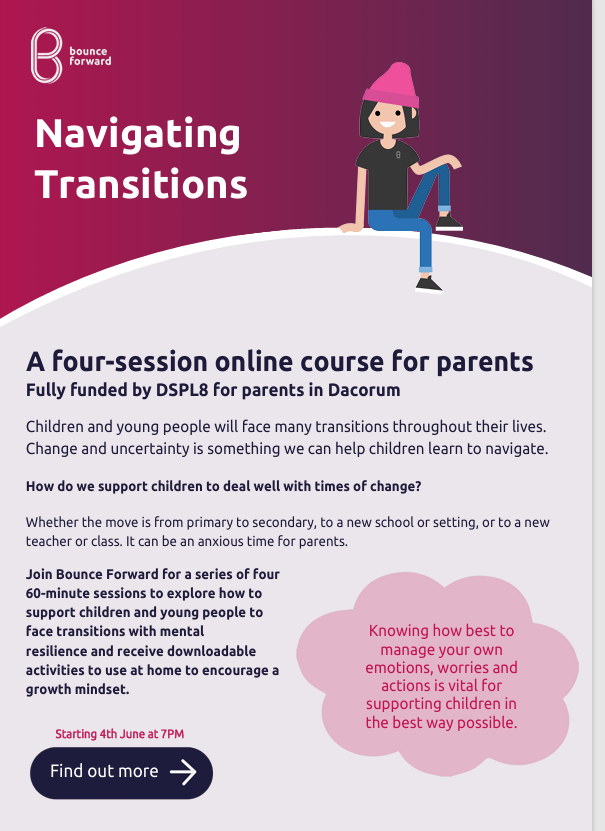
There are a number of excellent booklets and activity sheets to support young people explore secondary transition:
Activity on what stays the same with transition
Young Mind Advice on SEN Learners
Transition to secondary school - Parent Carer
Secondary Transition resources on BBC Bitesize can be found here